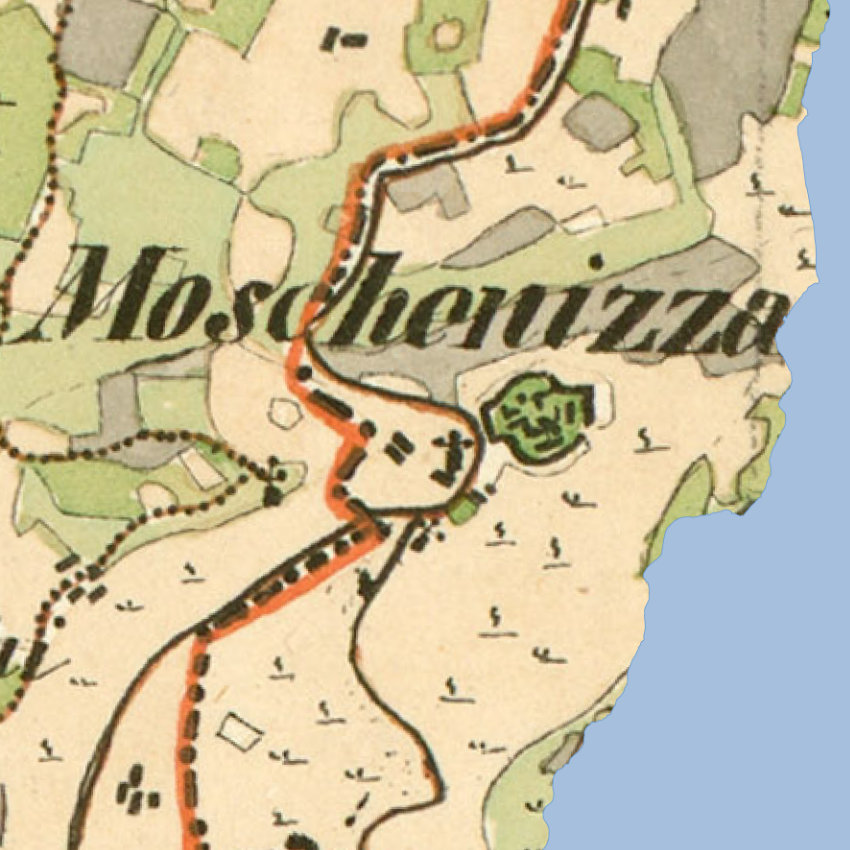
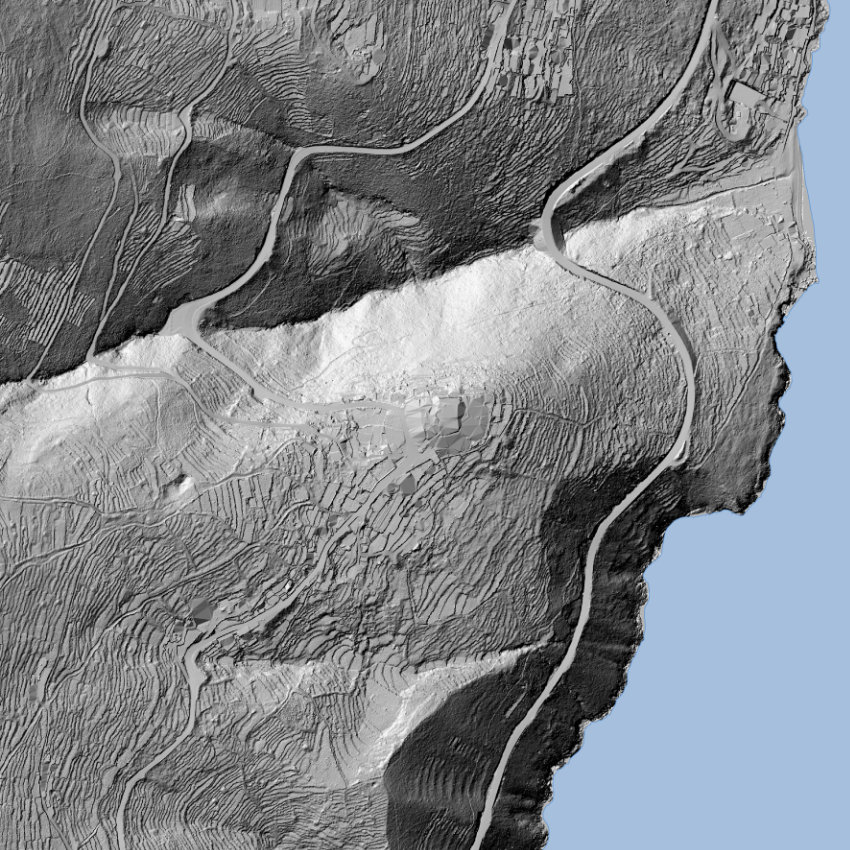
The small town of Mošćenice has its roots in prehistoric times, when its hilltop position above the sea provided the location for a hillfort. In the period when Roman rule guaranteed safety, the population moved from these fortified positions closer to the sea. However, the elevated position regained importance in the Middle Ages – the time from which we can trace the development of today’s fortified town. Mošćenice was first mentioned in 1374 in the will of Count Ugon of Duino, and then in 1395 in the Kožljak Border Act that determined the borders between Kožljak and Mošćenice.
In the Middle Ages, the town functioned as a commune that jointly disposed of land and other property according to the provisions of the Mošćenice Law or Statute. Traces of this period can still be found in the surrounding landscape in the form of the thousands of dry stone terraces that were the economic basis of this agrarian town. Today, unfortunately, they are mostly covered by a dense forest of laurel and holm oak.